What are the odds of you daydreaming about Christmas markets and already ending up here: reading this blog?
I would like to call that extremely lucky timing, (yes, I’m tooting my own horn a little here, but stay with me) because we've sent guides to enough of them to have the most practical & opinionated list of the best Christmas markets in Europe for 2026. So, this one's not just the famous names, but the ones you would actually want to build a trip around if you’re planning Europe around this time of the year. I'll tell you why...
Salzburg: The Crowd Fav!
Salzburg's old town is small. When I say small, I mean it’s small enough to walk end to end, which is why it works very well at Christmas. The entire town turns into one Christmas market, rather than one market inside a much bigger city.
The main square sits directly beneath Salzburg Cathedral and the Hohensalzburg Fortress, with smaller, cosier pockets of stalls tucked into laneways throughout the old town, so you're never more than a few minutes from another one. Get a Käsekrainer; a sausage with melted cheese running through the centre, and a hot chocolate with rum, and you've more or less nailed the whole afternoon.
What actually puts Salzburg at the top, though, is that it doesn't shut down for the holiday itself: the markets stay open straight through Christmas Day, Boxing Day, and New Year's, which very few on this list manage.
2026 dates: 19 November – 1 January 2027.
Open on Christmas Day, Boxing Day, and New Year's Day.
Connect with our specialists to plan your journey around Christmas and get the inside line on availability at markets like Salzburg and Vienna.
Vienna: The Glamorous Winter Break
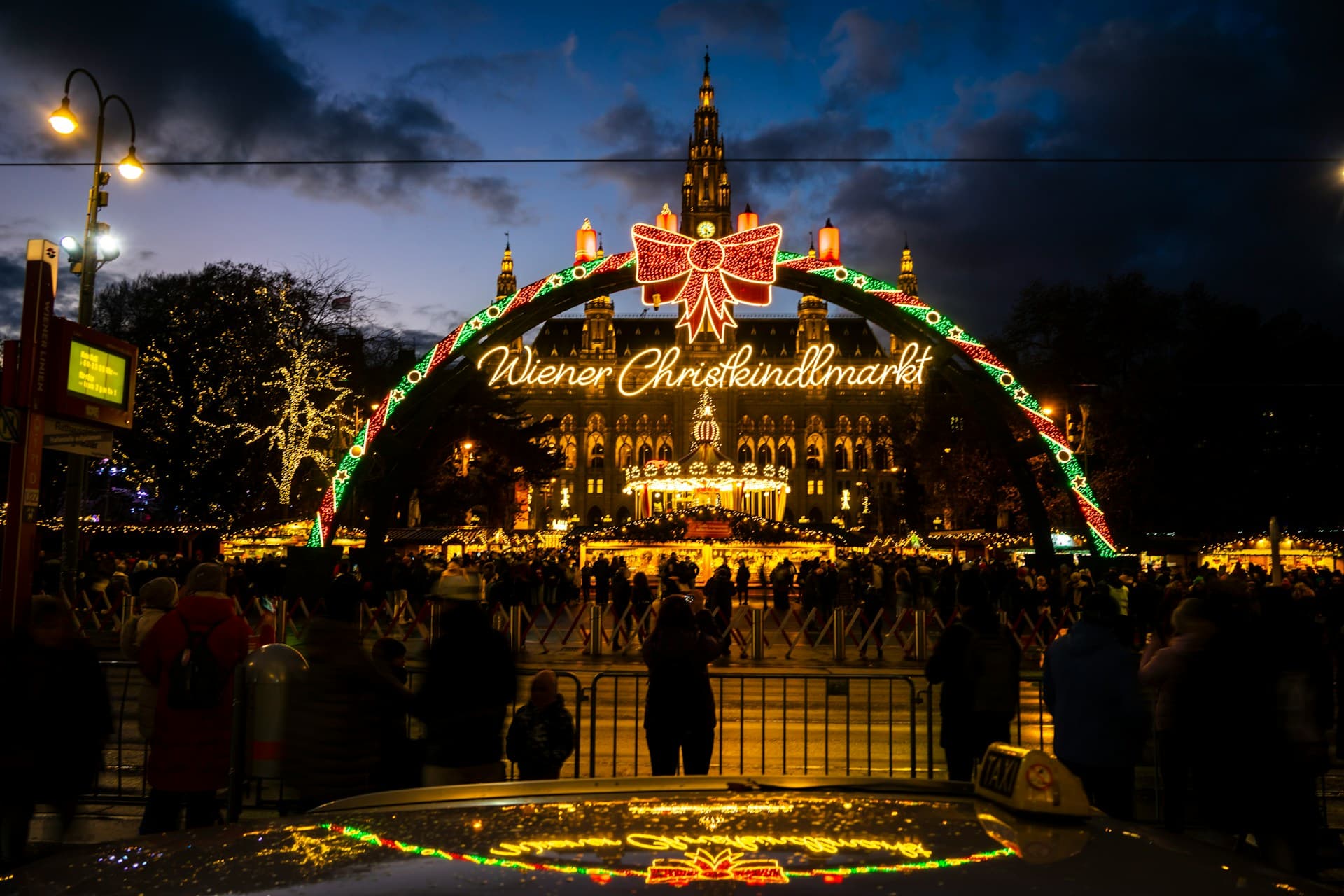
Vienna's signature market move happens every half hour after dark: a giant illuminated heart detaches from a tower above Rathausplatz and glides across the square on a wire toward the Herzerlbaum, the "Tree of Hearts."
It's a bit over the top, but entirely on brand for a city that's never been shy about a good show. The market sits in front of Vienna's neo-Gothic city hall, beside a small ice rink and horse-drawn carriages doing laps of the Ringstraße.
It's consistently ranked among the best Christmas markets in Europe for exactly this reason: the spectacle. Vienna also does something almost nobody else on this list does; it stays open in stages rather than shutting all at once, with the markets at Schönbrunn Palace and by the Prater's giant wheel running as dedicated New Year markets right through to 6 January.
2026 dates: 13 November – 26 December at Rathausplatz.
Select markets run through to 6 January.
Prague: Fairytale Setting
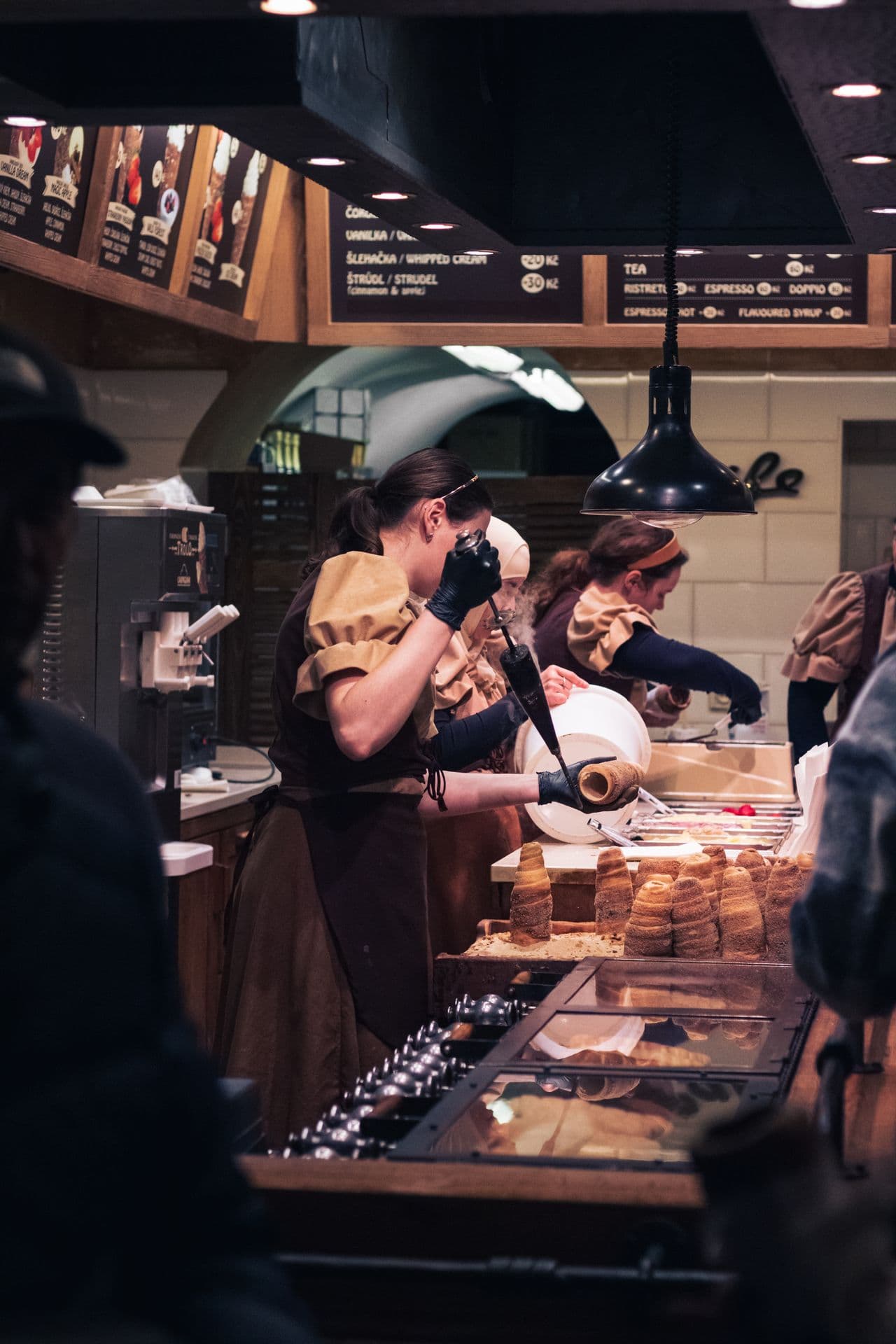
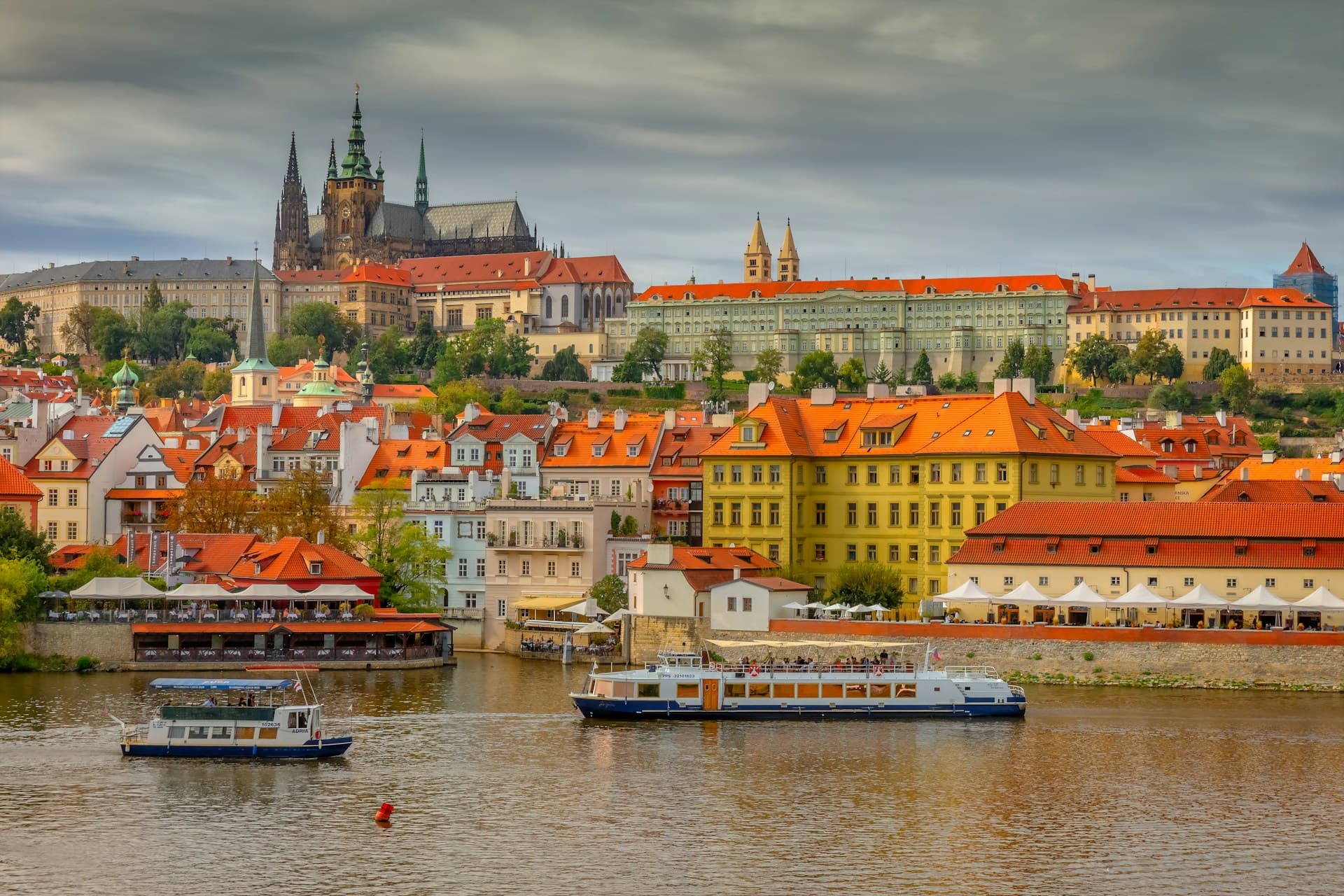
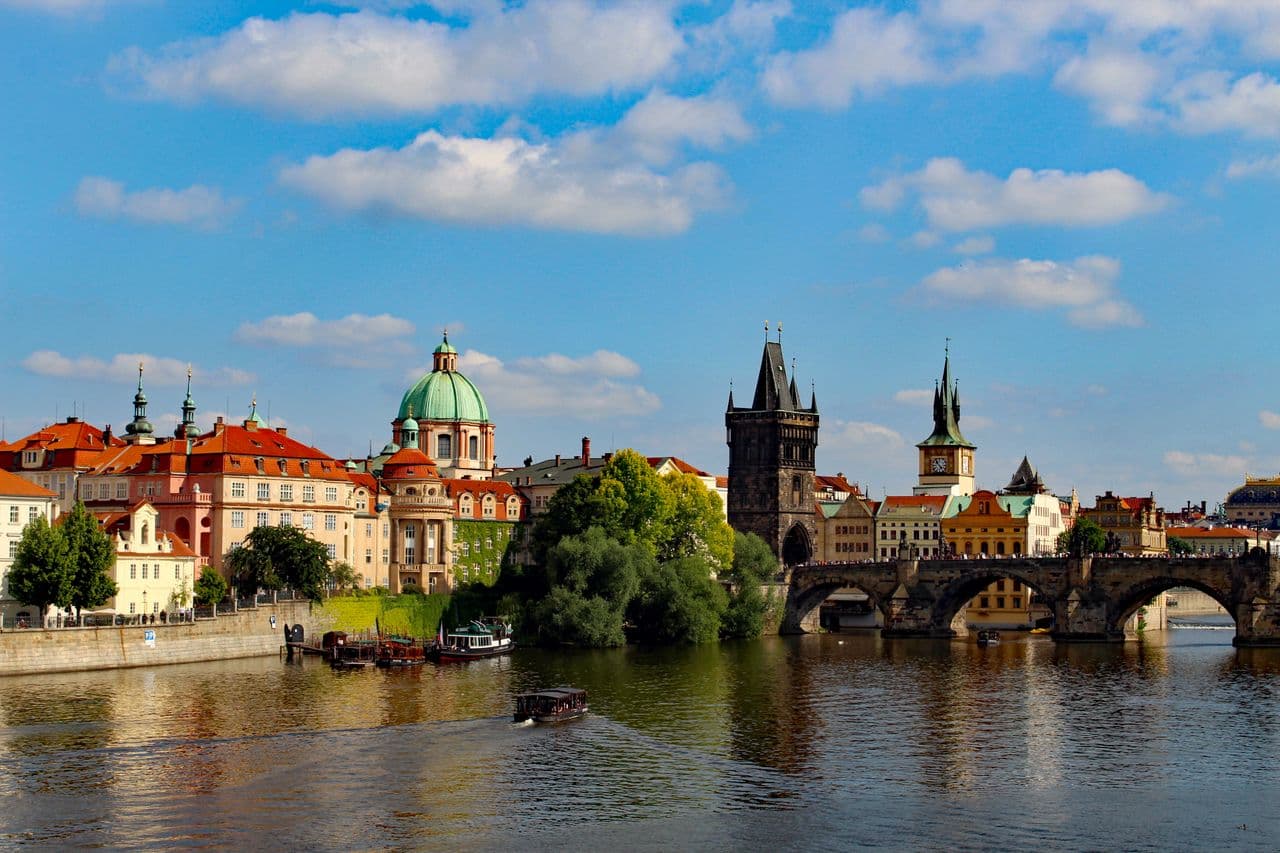
Prague's Old Town Square market has the kind of backdrop that sums up the photos you see for Christmas in Europe; spires, a giant tree, trams decorated for the season, and the crowds to match. The food list runs long with roast pork, sausages, lángos, trdelník, waffles, and the hot chocolate is thick enough to eat with a spoon.
The trade-off is real: Prague's Old Town is busy year-round, and Christmas doesn't thin that out. Early December beats the crowds, or basing yourself across the river in the quieter Malá Strana helps. Once you're past the market itself, Prague Castle stays open on Christmas Day when much of the city doesn't, and a day trip to Pilsen is a solid way to spend an afternoon between market visits.
2026 dates: 28 November – 6 January 2027. Open on Christmas Day and Boxing Day.
If a tailormade tour sounds better for you to plan your Europe Winter trip, our specialists can build the whole route around whichever markets make your list.
Nuremberg: Bring Your Kids Here
Nuremberg's Christkindlesmarkt is one of the most tightly regulated markets on this list, where everything sold has to be handmade and local to Franconia, which rules out the imported plastic that creeps into some bigger markets elsewhere.
That means proper Elisenlebkuchen (the region's famous nut-based gingerbread) and hand-carved Räuchermännchen, the little incense-smoking figurines that make genuinely good gifts rather than souvenir-shelf filler. It's one of the best Christmas markets in Europe for that reason according to me, long before you even get to the atmosphere.
For families specifically, the dedicated children's market at Hans-Sachs-Platz is hard to beat: a two-storey carousel, a mini steam train, and hands-on stalls where kids bake their own gingerbread instead of trailing behind the adults.
2026 dates: 27 November – 24 December. Closes at 2pm on Christmas Eve and does not reopen.
Prefer travelling with a group, where everything's already sorted? Explore our group tours today.
Cologne: Christmas, a Cathedral, And a Coaster
Cologne's main market sits directly beneath Germany's most-visited landmark: the largest Gothic cathedral in Northern Europe, under a canopy of lights strung over a hundred-plus red-roofed stalls. The food runs from roasted almonds to Flammlachs (salmon cooked over an open flame on wooden planks), and Glühbier, that’s mulled beer, and it turns up here more than almost anywhere else on this list.
A second, smaller market, Heinzels Wintermärchen in the Old Town, leans into local gnome folklore for a more playful, nostalgic feel. But Cologne's real edge might be its Brauhäuser, which are traditional brewpubs where small glasses of Kölsch keep arriving until you physically place your coaster over the glass to call it quits.
2026 dates: Cathedral market: 16 November – 23 December.
Strasbourg and Colmar: Our Favourite!
Strasbourg has been running a market since 1570, making it one of the oldest in Europe, and it wears the title "Capitale de Noël" accordingly. Rather than one central market, Strasbourg spreads several themed "villages" across the Grande Île: a UNESCO World Heritage old town, including a dedicated food market at Place des Meuniers and one of Europe's largest Christmas trees at Place Kléber.
Colmar, a short train ride away, is smaller, quieter, and arguably even prettier, often cited as visual inspiration for Beauty and the Beast, and easy to see in full in a single afternoon. Between the two, don't skip a Flammekueche; a thin, crispy tart topped with crème fraîche, onion, and bacon or a glass of off-dry Alsatian white at one of Colmar's small wine bars.
2026 dates: Colmar: 25 November – 29 December. Strasbourg: 27 November – 27 December (main chalets close Christmas Eve).
Budapest: All the Spectacle, None of the Price Tag
Budapest's markets cluster around Vörösmarty tér and directly beneath the dome of St Stephen's Basilica, with the city's trams strung in lights for the season. Both main markets stay open on Christmas Day and Boxing Day, which makes Budapest a genuine option for travelling over the holiday itself.
It's routinely one of the cheapest xmas markets europe has to offer, which is part of why it's on this list at all. The one catch: lángos, the city's deep-fried flatbread topped with sour cream and cheese, is genuinely better fresh from a market stall than anywhere else in the city, but it isn't priced like the rest of Budapest. Budget for that, then let the city's famously low prices cover everything else, including Trofea, an all-you-can-eat spot that undoes any market-food damage. A Danube cruise past the lit-up Parliament and Buda Castle rounds out an evening for less than a comparable night in Vienna or Copenhagen.
2026 dates: Expected mid-November – 1 January 2027 (organisers confirm exact dates in October).
Berlin: Too Many to Choose From
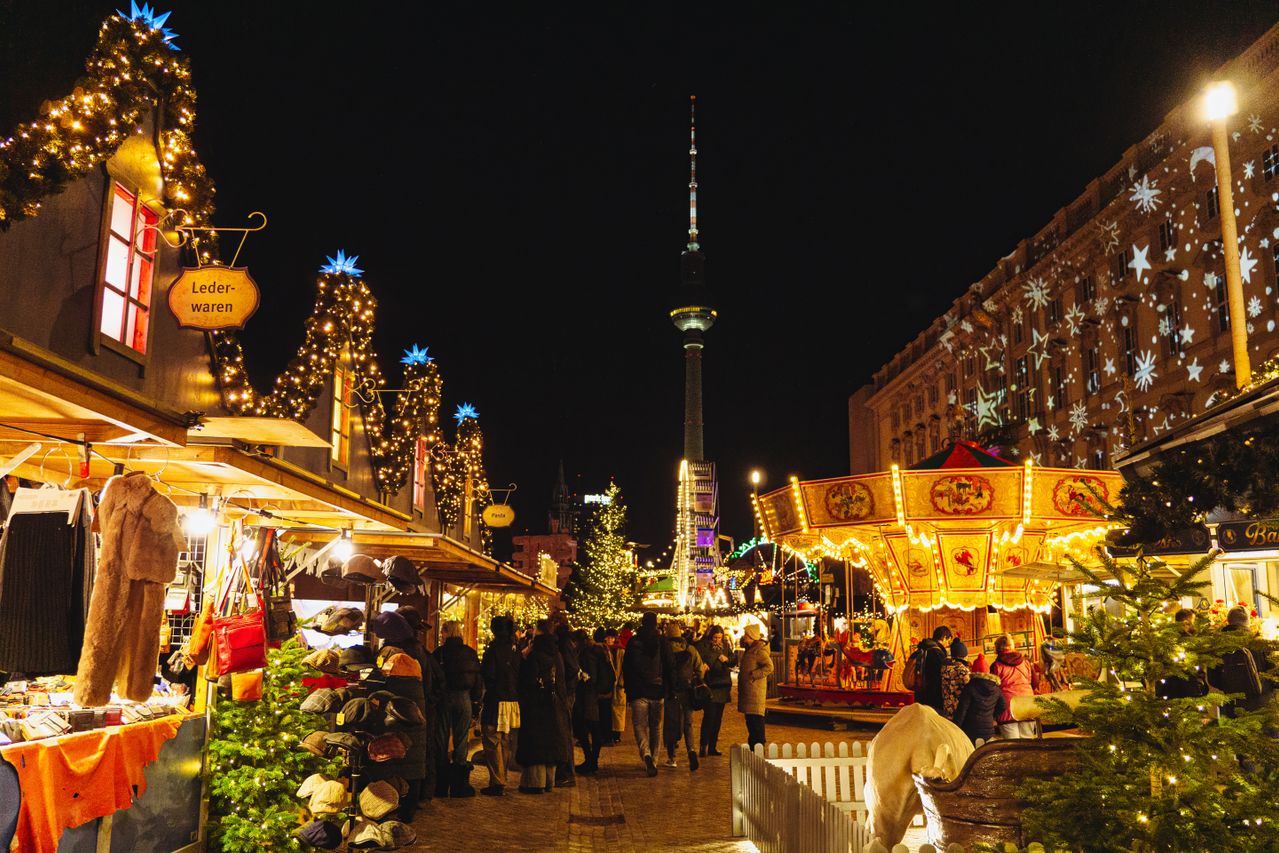
Berlin runs over 100 Christmas markets each December, including ten sizable ones, which makes it more of a citywide buffet. WeihnachtsZauber at Gendarmenmarkt is the upscale end of that spectrum, with heated tents, champagne, and Käsespätzle, set between two cathedrals and a concert hall.
At the other end, Heissa Holzmarkt in Friedrichshain runs along the River Spree with handmade gifts, international street food, and a 1960s carousel, while the nearby Historischer Weihnachtsmarkt leans into a full medieval theme featuring firelight instead of fairy lights, hand-cranked rides, and archery.
The trade-off with Berlin is purely logistical: it's a large, spread-out city, so seeing more than one or two markets in a day takes actual planning around its (thankfully excellent) public transport.
2026 dates: 23 November – 4 January 2027, depending on the market.
Copenhagen: Dialed Up in Lights
Copenhagen's Christmas signature is Tivoli Gardens, the second-oldest amusement park in the world, decked out with over a million fairy lights across 1,000 spruce trees for the season. The rides run as normal throughout, so it's entirely possible to ride one of the oldest rollercoasters on the planet before wandering off with a mulled wine in hand.
Tivoli requires a ticket, unlike most markets on this list, which is part of why Copenhagen sits further down this particular ranking despite being genuinely beautiful. The city's free markets, around Højbro Plads, Kongens Nytorv, and Nyhavn, mostly wrap up by December 21–23, so Christmas Day itself is quiet outside of Tivoli, which runs through to 3 January.
2026 dates: Tivoli Gardens: 14 November – early January 2027 (exact dates to be confirmed).
Dresden: The Oldest One, and the Least Touristy
Dresden's Striezelmarkt has been running since 1434, making it one of the oldest Christmas markets anywhere, old enough to make Strasbourg's 1570 start look comparatively recent. It's also home to one of the largest Christmas pyramids in the world, a tiered wooden carousel that turns above the stalls without anything mechanical driving it.
What sets Dresden apart more than either of those facts, though, is who's actually there: largely German families and domestic visitors rather than international crowds, which gives it a genuinely local feel that's harder to find at markets this famous. Try the Eierpunsch (a warm, alcoholic eggnog-style punch) and Dresdner Handbrot (bread rolls baked with cheese, ham, and sour cream) while you're at it. The main Striezelmarkt shuts on Christmas Eve, but the markets at Neumarkt and Augustusmarkt run through to 3 January, covering the week most of Germany takes off.
2026 dates: Striezelmarkt: 25 November – 24 December (closes 2pm Christmas Eve, shut on Christmas Day).
Wish To Build a Trip Around More Than One?
Sticking to a single stop works fine for a Christmas markets Europe trip, but a lot of travellers doing their first Christmas in Europe would want more than one stop, right? That's really where a proper route pays off…
An Imperial Christmas Route that slides though Vienna, Budapest, Prague, Salzburg, and Munich, hitting four of the entries on this list in a single trip, built for anyone who can't choose just one of the "big" Central European markets and would rather see them back to back!
A Classic Europe Winter Route that goes through Paris, Amsterdam, Munich, Zurich, Innsbruck, Padova, Tuscany, and Rome, strung together as one single Europe holiday, picking up a market or a festive square in nearly every stop along the way.
Which One Should You Go For Though?
Here’s my view: Salzburg wins on sheer atmosphere, Nuremberg wins with kids in tow, Dresden wins if you want a market that still feels like it belongs to the people who live there. What matters more is matching the market to the trip: a weekend break, a full Central European loop, or a single unmissable stop bolted onto a bigger Christmas in Europe itinerary. Whichever it ends up being, book earlier rather than later, because 2026's dates are already locked in, and the good hotels near the best squares go quickly!
Want to plan your Europe trip around Christmas or New Year's? Explore our Europe tour packages from India and enjoy proper christmas markets europe package deals as part of the festive season, with special discounts on winter departures.